

Membrane Inlet Mass Spectrometry for Denitrification and Anammox Studies
Membrane Inlet Mass Spectrometry for Denitrification and Anammox Studies
1. Description of membrane input mass (MIMS)
MIMS is a soluble gas mass spectrometer that applies to the N in the water sample of the environment.2、O2and Ar concentrations, stabilize isotope detection; also available for CO2、CH4The measurements of DMS and other low-molecule dissolved gases show that the membrane prototype mass spectrometer (MIMS) can still maintain good signal stability over a long period (10h).
The study found that MIMS and N IPT combined to avoid the analytical errors that may result from complex degascation steps, with the advantages of measuring directness, the small number of samples required and the speed at which they would be measured, and applied to the process of antinitronitrification and anaerobic ammonia oxidation in flood environments.
2. Composition of membrane prototype mass (MMS)
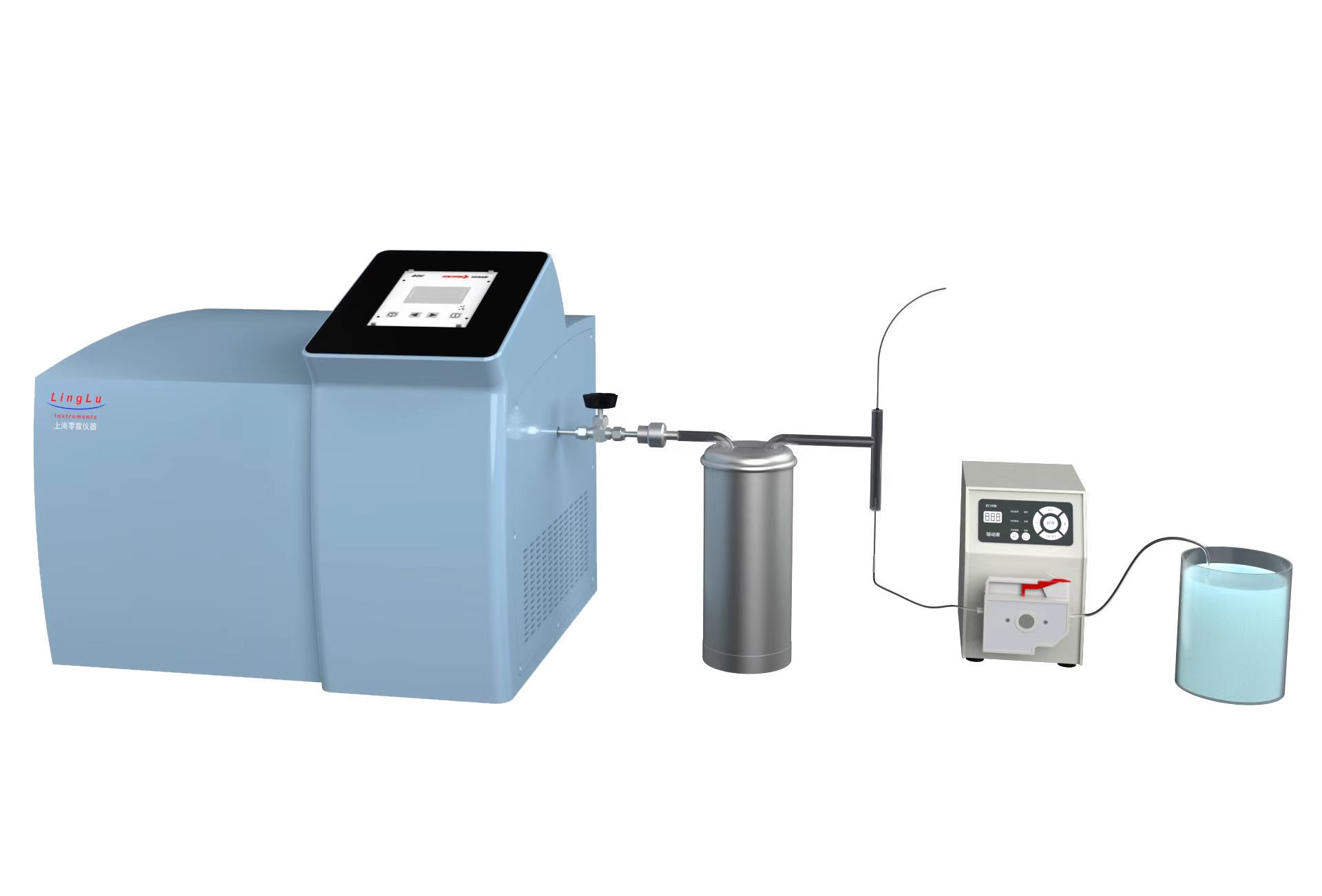
MIMMS (Memblane inlet mass spectrometer) consists mainly of worm pumps, hot baths, liquid nitrogen chillers, four poles of polar spectrometry, signal collectors, and computer systems.
3. Motion of membrane prototype (MIMS) operation
MIMS operating principles: water samples to be measured enter temperature-regulating ablution units under the operation of a creeping pump, water samples with temperature balance enter a vacuum system and come into contact with semi-permeable membranes, central water samples sub-gases enter the quadratic mass spectrometer via a semi-perfore membrane, first ionize with the effect of an ionizing device, and then the ion of different mass enters the detector after being separated from the oscillation field. Wrinkle pumps can input water samples into the input system at a uniform rate, hot baths can quickly adjust the water samples saved at low temperatures to the actual sample temperature, liquid nitrogen chills can remove water vapour, CO22、CH4 Low molecular organic compounds (LOCs) are used to prevent interference with gas detection.
Steps to measure data&Method of calculation (anti-nitrification and anaerobic ammonia oxide)
(i) Method I:
Step 1: Standard sample marking (temperature: 25°, salinity: 0)
Atmospheric15N’s natural abundance is 0.00365, theoretically.29N2: 28N2and30N2 : 28N2Ratio 7.32 x 10, respectively-3and 1.34 x 10⁻⁵I don’t know. According to the Weiss equation,28N2Concentration C28N2.SIn the standard water sample.29N2and30N2.Stheoretical concentration C29N2.Sand C30N2.S。
C29N2.S = 7.32 × 10⁻³× C28N2.S
C30N2.S = 1.34 × 10⁻⁵×C28N2.S
Standard water samples for use in membrane prototype mass spectrometer testing, obtained28N2、29N2and30N2Each mass spectrometry signal strength, establishing a standard curve equation Y = CF*I, I for mass spectrometer signal strength and N2 for concentration. The correction factor CF formula is as follows:
CF28=C28N2.S/I28
CF29=C29N2.S/I29
CF30=C30N2.S/I30
(C28N2.SBased on Weiss equation, I28、I29、I30It’s been tested by MIMS.
Step 2: Unknown sample determination
C28N2=CF28*I28
C29N2=CF29*I29
C30N2 =CF30*I30
(CFAccording to standard sample calculations,28、I29、I30It’s been tested by MIMS.
Method II :
15Non-isotope tracer
15The N-isotope tracer method is a new method for quantifying the activity of anaerobic ammonia oxidation, which, depending on the principles of anaerobic ammonia oxidation and antinitronitration processes, can measure nitrogen from both anaerobic ammonia oxidation and antinitration. It is possible not only to calculate an anti-nitrification rate but also to quantify the rate of anaerobic ammonia oxide to N2 emissions.
A. Isotope pairing for anaerobic ammonia oxidation activity
Anaerobic ammonia oxidation is the new element of the global nitrogen cycle, which is the process of producing nitrogen directly from the reaction of ammonium and nitrite root under anaerobic conditions:
NH4 + + NO2 – → N2 + 2H2O (1)
In anaerobic conditions, the anti-nitrification process occurs simultaneously in the soil. The anti-nitrogenic reaction is that the anti-nitrogen bacteria will NO3 – Revert to N2O and N2 The process, the response process is:
NO3 – →NO2 – → NO → N2O → N2 (2)
NH4+ and NO2 – One nitrogen atom, one atom, one atom. Nitrogen is produced through a series of intermediate reactions from NO.3 –I don’t know. Therefore, use 15 N As in anaerobic conditions, both reaction (1) and (2) produce nitrogen, but the response mechanisms differ. Anaerobic ammonia oxidation. N2 Nitrogen from anaerobic ammonia oxidation can be found in different components of nitrogen by bitiform tracer (N2)28N2,29N2,30N2 ) Separate.
B. Test Operational Steps
15N isotopic tracer experiment, with three treatments: one parallel sample for different experimental operations: 1 plus 100 μmol/L 15NH4 +I don’t know. Add 2 100 μmol/L 15NH4 + + 100 μmol /L14NO3 –I don’t know. Add 3 to 100 μmol/L15NO3 –。
Processing 1 plus only 15NH4 +It’s to test the pre-breeding process for anaerobic conditions and sediment background. 14NO3 –Has been fully consumed. If it reaches the test, The anaerobic condition required would not have occurred in conjunction with the nitroglycerinization-antinitrification reaction, which would not have been observed.30N2 Accumulation; equally if pre-culture The sediment base. 14NO3 –It’s completely depleted and unobserved.29N2The apparent accumulation. In treatment 2, if the anaerobic condition required for the experiment is met, no30N2 It’s clearly cumulative, and it’s from 15NH4 +Medium15N and 14NO3 –Yes.14The idea of N would lead to 29N2Visible accumulation to demonstrate the presence of anaerobic ammonia oxide processes. Processing thallium additions15NSpecially marked. NO3 –and the sediment base14NH4 +In oxygen deficit or Anti-nitrification and anaerobic ammonia oxidation occur in anaerobic environments. The difference in reaction between the two could be the generation of nitrogen. Medium 28N2,29N2,30N2 The composition is reflected in the fact that it could have been used to detect the entire denitrogent potential of the sample (including antinitronitration and anaerobic ammonia oxidation).
C. Method of calculation
Compared to a single test N2The mass spectrometry can be more precise in the gas ratio. (e.g. N)2Ar. MIMS Measurement N2Ar’s precision is<0.5%、<0.05% measured N2Ar precision (mass ratio)< 0.03 %。Also, test N2Ar, you can still reduce O.2 Effects of changes in concentrations. N in water environment2It originates from biological processes (mainly anti-nitrification and physical processes (hydrogas balance)), and Ar solubility is controlled mainly by temperature and salinity conditions (pure physical processes). So you can get a water sample.2∶Ar calculates the real N.2Concentration.