

Basic overview of the project
The project covers 100,000 square metres of land, dismantles 200,000 lead-acid batteries annually and produces 4 million batteries. Construction of production workshops, two battery production lines, which will be accompanied by recycling, dismantling and reprocessing of used batteries.
Project description
Chemical batteries are the most important batteries in batteries. Chemical batteries are divided into single and secondary batteries depending on whether they are recycled. Of these, a single battery is a single battery that can only be used by an active substance, known as the original battery, such as the zinc manganese cell, the alkalin manganese cell, etc.; a secondary battery is charged, recycled and known as the storage battery. Accumulation cells use cell-inactive substances for chemical reaction output currents in discharge, and reverse chemical reactions for storage of electrical energy in charging states.
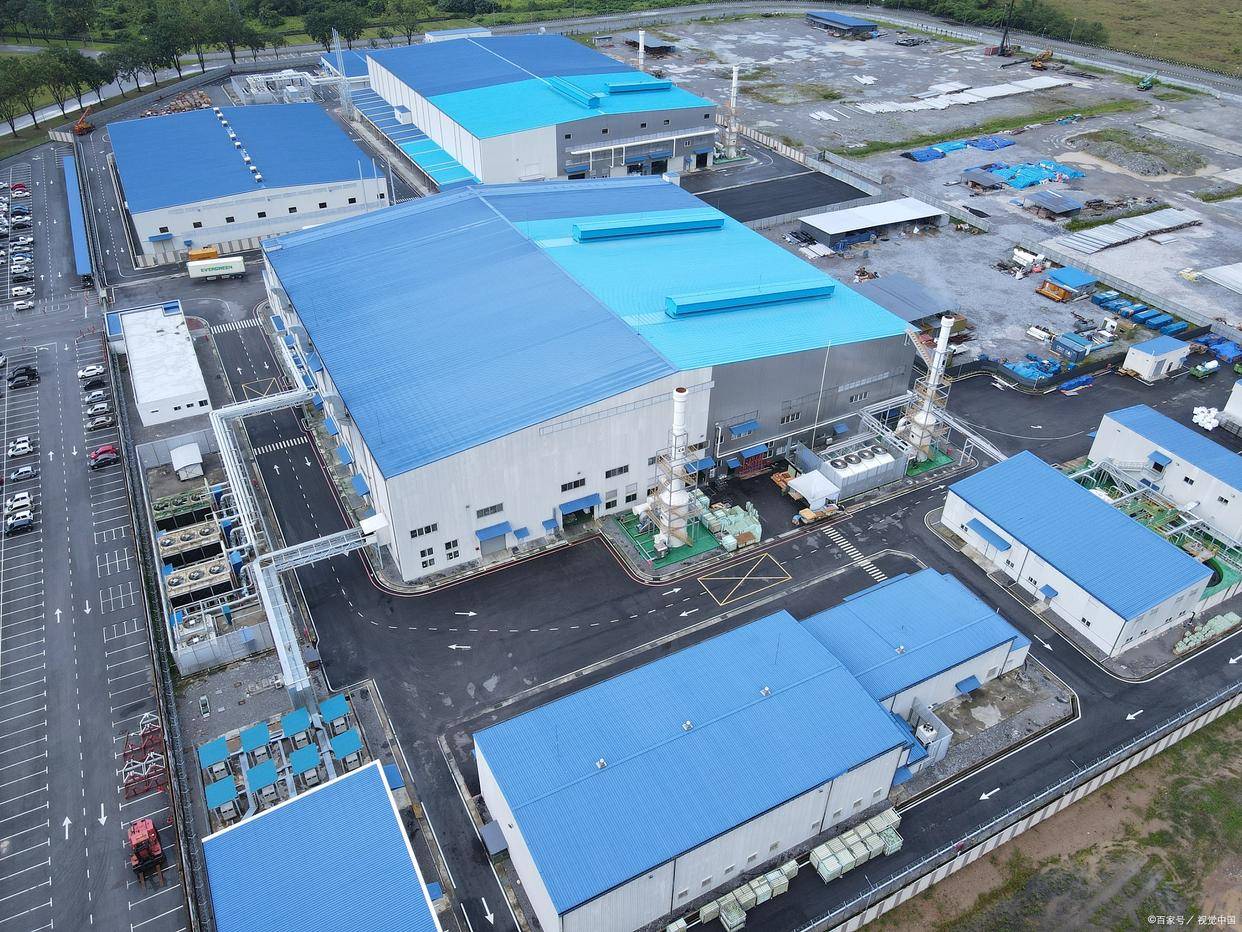
The project proposes to build a recycling system for used batteries (mainly lead-acid batteries) and recycling and dismantling centres where recycled materials such as lead, plastics, etc. in dismantled batteries are processed and re-engineered as feedstock into battery production lines, new batteries are made and sold locally.
……
III. Analysis of project strengths
(1) Policy advantages
The Ministry of the Environment has issued the Lead-acid Battery Production and Regeneration Pollution Prevention Technology Policy, which sets out requirements for the production and recycling of lead-acid batteries in the cleaner production, air pollution control, water pollution control, solid waste disposal and integrated use, and encourages the development of new technologies. The production and regeneration of lead-acid batteries should increase industrial restructuring and product optimization, rationalize industry layout and further increase industrial concentration and size.
(2) Project strengths
Lead-acid batteries are the cheapest secondary batteries, and the price per unit of energy is around one third of the lithium ion or hydrogen nickel batteries. In addition, lead-acid batteries are dominated by lead and lead compounds, with lead containing more than 60 per cent of the total quality of the batteries, a higher residual value of used batteries and a recovery price of more than 30 per cent for new batteries, resulting in lower combined costs for lead-acid batteries. There are currently no such projects in the province and there is greater market space.
……
IV. Project industry background
(1) Status of the lead-acid battery industry
My country is the world ‘ s largest producer, consumer and exporter of lead-acid batteries. The lead-acid battery industry in our country is dominated by market-based production, with the production of lead-acid batteries minus exports being approximately domestic consumption.
In recent years, our production of lead-acid batteries has remained relatively stable, above 20 million kVA. According to data published by the China Light Industry Information Centre, our production of lead-acid batteries rose by 4 per cent in 2019 and by 12.28 per cent in 2020, when our production of lead-acid batteries was 22,736 kVA.
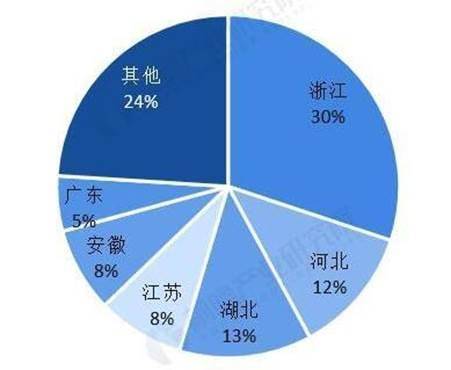
Structurally, domestic production of lead-acid batteries is concentrated mainly in Zhejiang, Hubei and Hebei, which account for about 55 per cent of total national production; in addition, lead-acid batteries in Jiangsu, Anhui and Guangdong each account for more than 5 per cent of total national production, while in the rest of the region they are less than 5 per cent.
The province with the highest production of lead-acid batteries in the country is Zhejiang province, which accounts for 30 per cent of the total national production of lead-acid batteries, followed by Hubei province, which accounts for 13 per cent, and Hebei province, which is the third largest, accounting for 12 per cent.
Distribution of production of lead-acid batteries in major provinces and cities of China (in %)
The battery manufacturing industry, which is both a traditional industry and an important component of the new energy industry in our country, is closely linked to a number of strategic and emerging industries, including new energy vehicles, renewable energy sources, modern electronic information, new materials and equipment manufacturing. It is also the most important basic industry in the construction of our national economy. The battery manufacturing industry is the foundation for the development of the country ‘ s population and for the creation of a healthy society. The battery products have a broad application area and a very important role in adapting to the country ‘ s new situation of national economic development, safeguarding the needs of national defence strategies and meeting the needs of the public for work and diversification of consumption.
(2) Analysis of project outlook projections
Currently, large-scale industrial secondary batteries are mainly lead-acid batteries, cadmium nickel batteries and lithium ion batteries. Cadmium nickel batteries contain highly toxic element cadmium and are gradually replaced by other batteries. Currently, the most widely used batteries are lead-acid and lithium ion batteries. Lead-acid batteries have the following performance comparative advantages compared to other secondary batteries:
A. The longest-lasting, most technologically mature batteries for industrial production, which are stable, reliable and appropriate;
B. Use of rare sulphate as electrolyte, non-flammable, batteries designed for constant or low pressure and safe;
C. A higher work voltage and a wider work temperature range applicable to high multiplier discharge applications such as hybrid electric vehicles (HEV);
D. Capable of floating power, with high performance of shallow discharges, applicable in the areas of uninterruptible power supply (UPS), new energy reserves, grid peaking valleys;
E. Large-capacity batteries are technically mature and can be made of thousands of entrepreneur cells, facilitating large-scale storage.
Lead-acid batteries are the lowest-priced secondary batteries and the price per unit energy is about one third of lithium ion batteries. In addition, lead-acid batteries are dominated by lead and lead compounds, with lead containing more than 60 per cent of the total quality of the batteries, a higher residual value of used batteries and a recovery price of more than 30 per cent for new batteries, resulting in lower combined costs for lead-acid batteries.
In 2019, the National Directorate for Market Supervision and the National Committee for Standardization approved the publication of the Technical Guidelines for the Recovery of Waste Lead-acid Battery. It provides for the collection, storage, transport, transfer and management of used lead-acid batteries, establishes a one-sum recovery system and promotes the development and integration of the recycling of used lead-acid batteries in China.
The social preservation of electric bicycles in China is now close to 300 million, and the life expectancy of lead-acid batteries is between 1.5 and 2.5 years.
For the development of the lead-acid battery sector, sales of electric bicycle-carrying lead-acid batteries in China are projected to grow at an average rate of 5.4 per cent by 2022, meaning that the market for lead-acid batteries still has some potential for development.
……
V. PROJECT INVESTMENT BUDGET
A total of $40.00 million was invested in construction, of which $35.00 million was invested and liquidity was about $50.00 million.
Project effectiveness evaluation
The project covers the post-partum period, with annual sales revenues of $21 million, profits of $66 million, a seven-year investment recovery period (after tax, including one year of construction) and a 16 per cent investment profit margin.
……