First author: Minthao Liu, Shuai Yang
Communication author: Tsing, Tsui Gyeong, Choi Hsien
Communications unit: Shanghai Institute of Advanced Studies, Henan Institute of Technology
DOI:10.1038/s41467-023-39544-9
To achieve efficient catalyst design for CO2 reductive reaction, various catalytic metal centres and formulation molecules are assembled into co-valent organic frameworks. Among them, the metamine formulation enhances the binding capacity of the CO2 molecule, while the ion skeleton improves the electroconductivity rate and the charge transfer along the skeleton. However, the direct synthesis of co-valent organic frameworks with methamids and ion skeletons remains a challenge due to the dilemma of electrostatic exclusion and composition intensity. In this paper, the authors of the former peak, Xu Qing, and Choi Hsien have developed a covalent organic framework for CO2 reduction, i.e., the correlation between the covalent organic framework structure and catalytic performance by regulating the formulation and formulation keys of the covalent organic framework of the template. Through dual modifications, CO2 combined capabilities and electronics can be well regulated, making the activity and selectivity of CO2 retroactivity manageable. It is noteworthy that the dual-functional co-valent organic framework can achieve high selectivity, with the maximum CO Faraday efficiency of 97.32 per cent and conversion frequency of up to 9922.68h-1, performance significantly superior to the underlying co-valent organic framework and single modified co-valent organic framework material. In addition, theoretical calculations further suggest that the higher catalytic activity can be attributed to Cooh*, which makes it easier to form *CO intermediates. The study provided a new insight into the design of a co-priced organic framework for CO2 reduction.
Synchronising folder
1. This paper has developed a multi-level synthesis and transformation strategy to construct COFs, N+-NH-COF, with superior electro-catalytic CO2 restoration performance, in which N+ is ion modification and NH is reductive.
Catalysing catalysts show efficiency of up to 97.32% CO Faraday at -0.8 V and up to 9922.68 h-1 at -1.0 Vvs. RHE.
The restoration of the C=N digital key in COFs to the C-N key and the ionification of the formulation can significantly increase catalytic activity and product selectivity.
Background
Covalent Organic Frameworks (COFs) are highly programmable polypolymers consisting of organic nodes and covalent key-connected ingredients. The diversity of building units makes them highly structurally sustainable in skeletons, porerates and capping structures, resulting in many customized functions. Thanks to molecular designability, COFs are ideal templates for building CO2RR catalysts whose catalytic behaviour depends on the structure and characteristics of COFs. From a structural point of view, the corresponding properties of COFs, such as CO2 combined capacity and electronic conductivity, can be regulated by changing the construction unit or formulation key. Thus, the COF structure of the metamine key and the ion skeleton, respectively, enhances the combined capacity of the CO2 molecule and the conductivity of the skeleton, which is ideal for an efficient CO2RR process.
The bottom-up synthesis strategy is the most common way to directly construct functional COFs. However, limited by spatial positional resistance, solubility differences and microreversibility, some civil service groups cannot be directly introduced into COFs through bottom-up synthetic strategies. As an alternative, synthetic and retrofitting strategies provide a promising way to construct functional skeletons, holes and keys at molecular levels that have a manageable catalytic effect. Therefore, if a single-step reduction and ionization post-modification strategy is well integrated, it is expected that COF materials with reductive amitamine keys and ion skeletons will be available. However, there are still few studies in this area.
Text Parsing
The NH-COF generation was achieved by reducing the C=N key in the COF by adding NABH4 to the dimethylethylamide (DMAC), and the ionation of the PATA unit into N++-COF was used in the Menshutkin reaction using the in situ ammonium group. The modification of COF by two functions (restoration and ionization) after sequence synthesis can successfully synthesize N+-NH-COF materials.
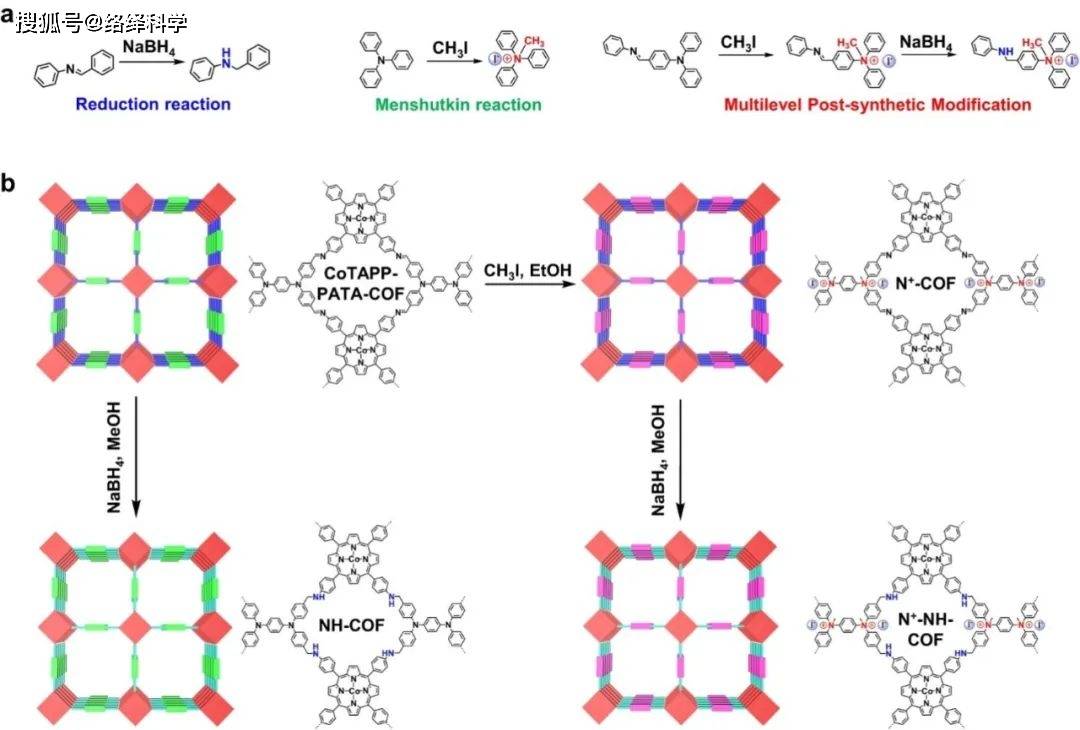
Figure 1. Mapping of the multi-level synthesis process
The COTAPP-PATA-COF PXRD distillation results show a characteristic peak at 5.15, 11.02, 12.23 and 21.84°, corresponding to (011), (022), (031) and (001) crystals. At the same time, the crystal structure of CoTAPP-PATA-COF is an AA stacking model, thus providing open access to efficient transmissions.
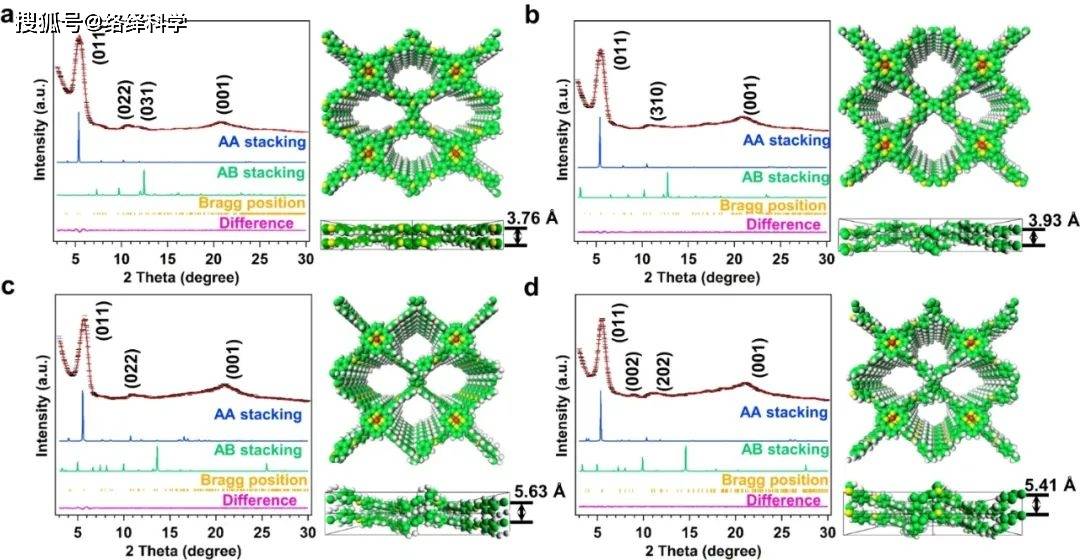
Figure 2. Four groups of COFs with PXRD distillation. (a) CoTAPP-PATA-COF, (b) NH-COF, (c) N+-COF, (d) N+-NH-COF
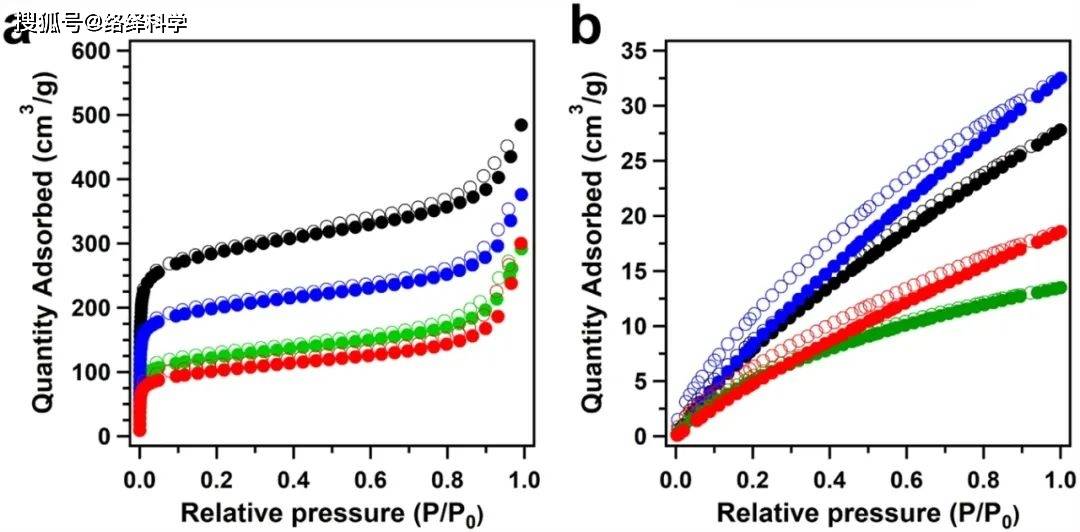
Figure 3. COTAPP-PATA-COF (black), N++-COF (green), NH-COF (blue) and N+-NH-COF (red) nitrogen adsorbing off curves at (a) 77 K and (b) CO2 adsorbing curves under 273 K
COTAPP-PATA-COF, N+-COF, NH-COF and N+-NH-COF, respectively, contained concentrations of Co. 4.0, 4.0, 3.7 and 3.7 wt. per cent, consistent with the ICP test results (3.6, 3.5, 3.3 and 3.1 wt. per cent, respectively). In addition, four groups of COFs have high-resolution CO 2p XPS spectras showing Co-N bits, confirming that the Co-N bits can be kept well after multi-level modifications.
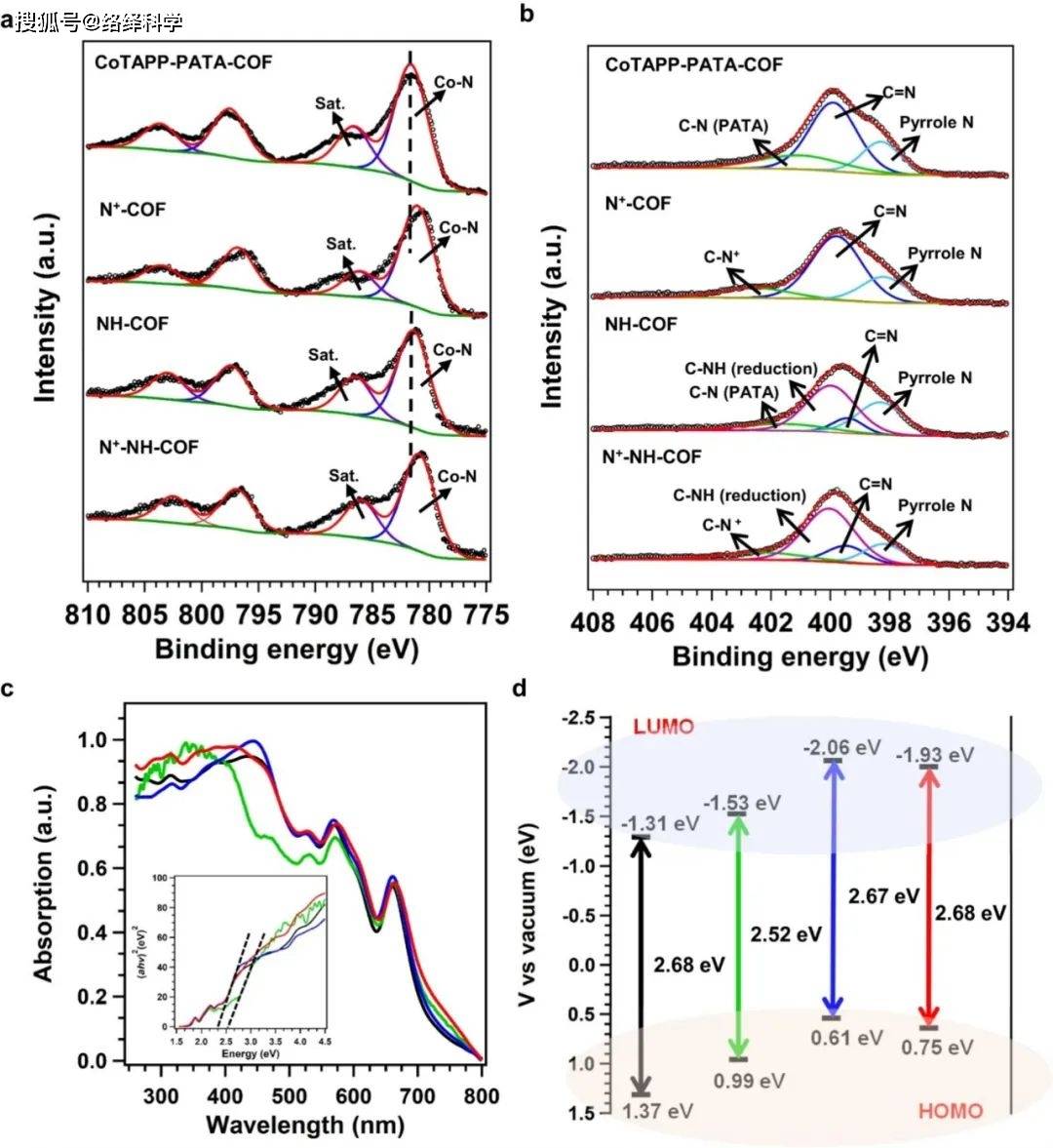
Figure 4. Electronic structural indications for four groups of COFs
The LSV curve indicates that the current density of CoTAPP-PATA-COF and NH-COF is close within the same level. In contrast, the increased current density of N+-COF and N+-NH-COF indicates that ionized skeletons can facilitate electronic transmission and thus increase current density. COTAPP-PATA-COF, N+-COF, NH-COF and N+-NH-COF at –1.0 V levels with TOF values of 4166.19, 7453.19,7604.63 and 9922.68 h-1, respectively.
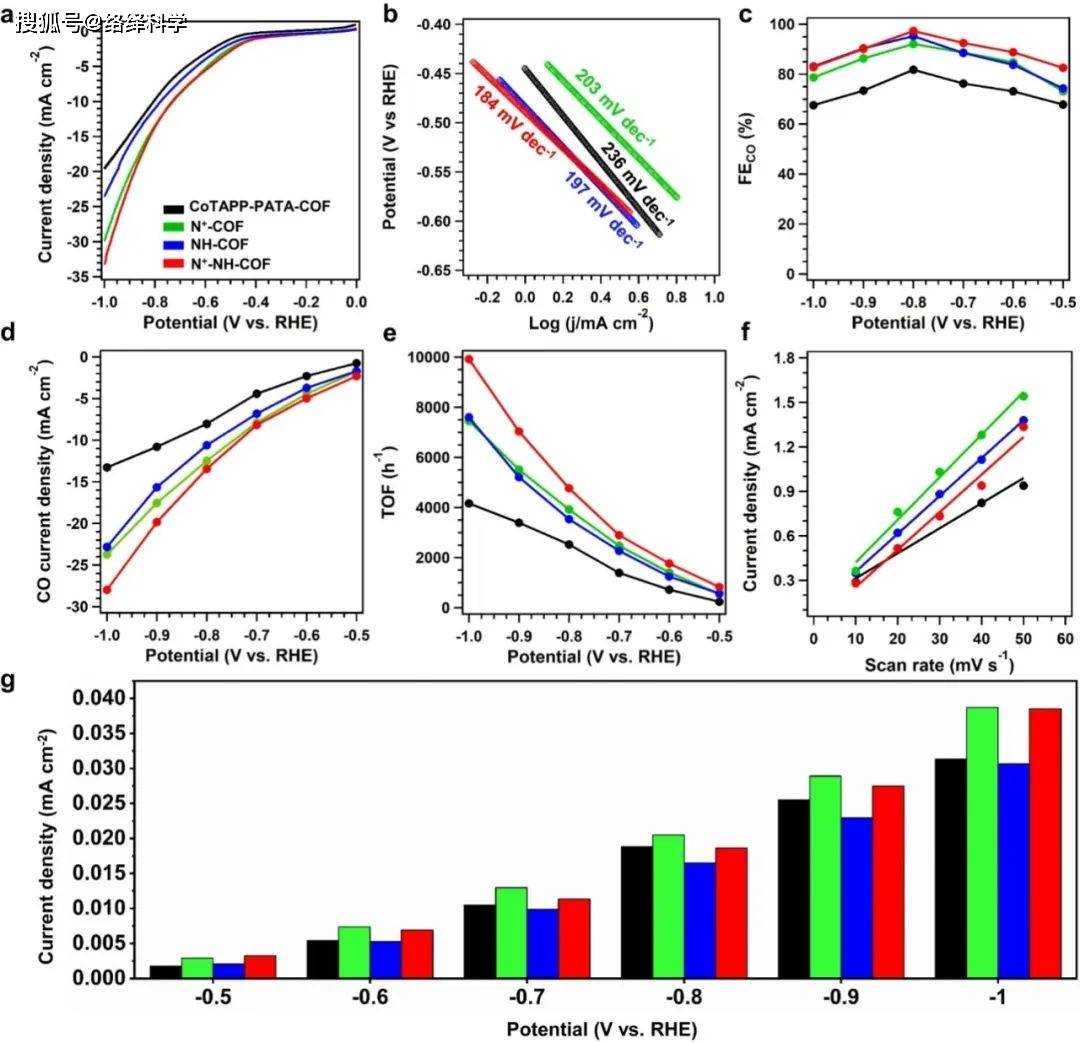
Figure 5. Catalytic CO2 restoration performance of COFs
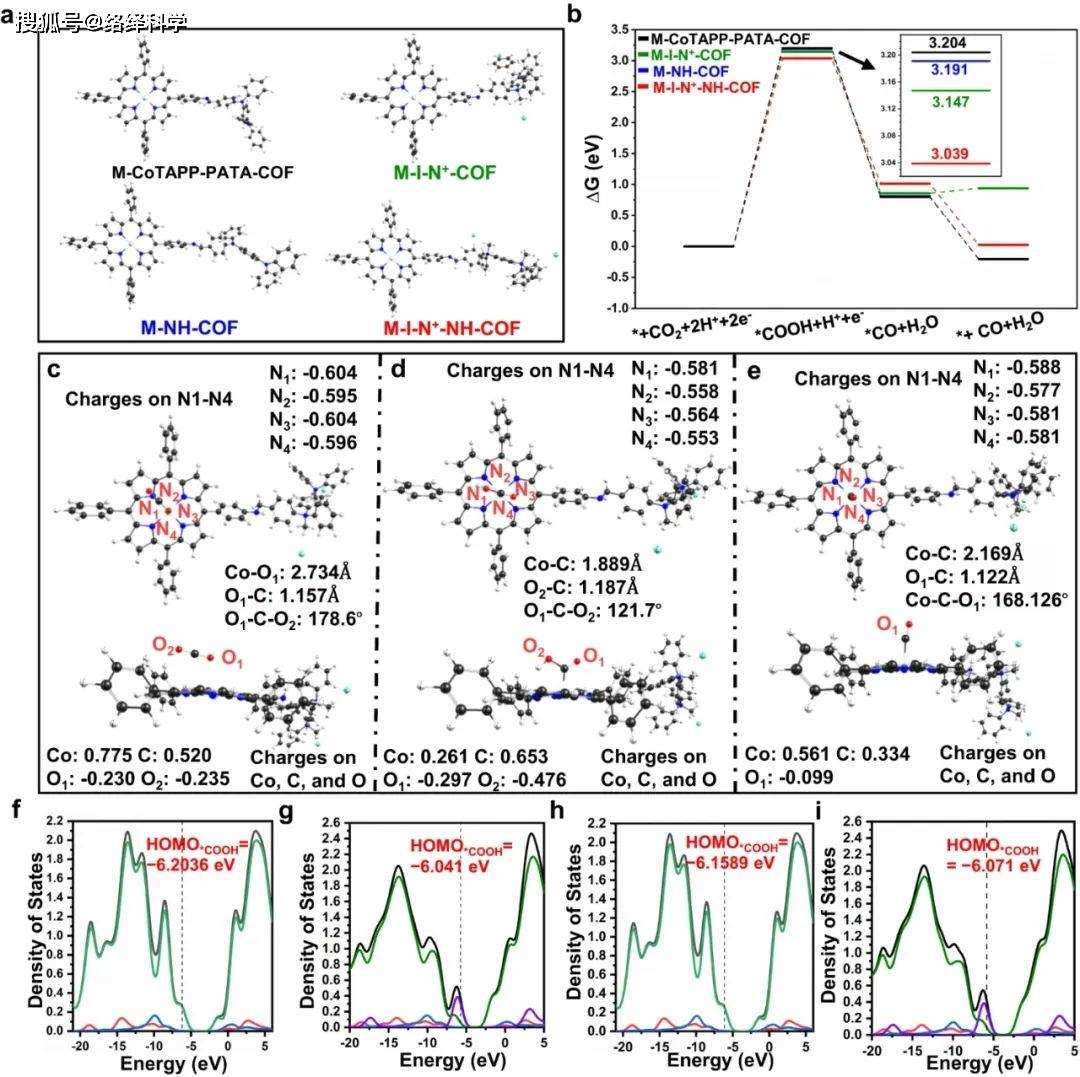
From a thermodynamic point of view, *COOH ‘ s minimum freedom changes are consistent with its optimal performance. In addition, both M-I-N+-COF and M-I-N+-NH-COF *COOH Free Dynamic Modified Values (∆G) are lower than M-COTAPP-PATA-COF and M-NH-COF, indicating that ionization is more conducive than neutral.