

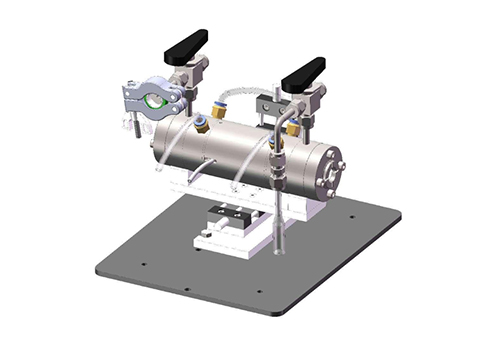
Pyridine Adsorption IR Accessory
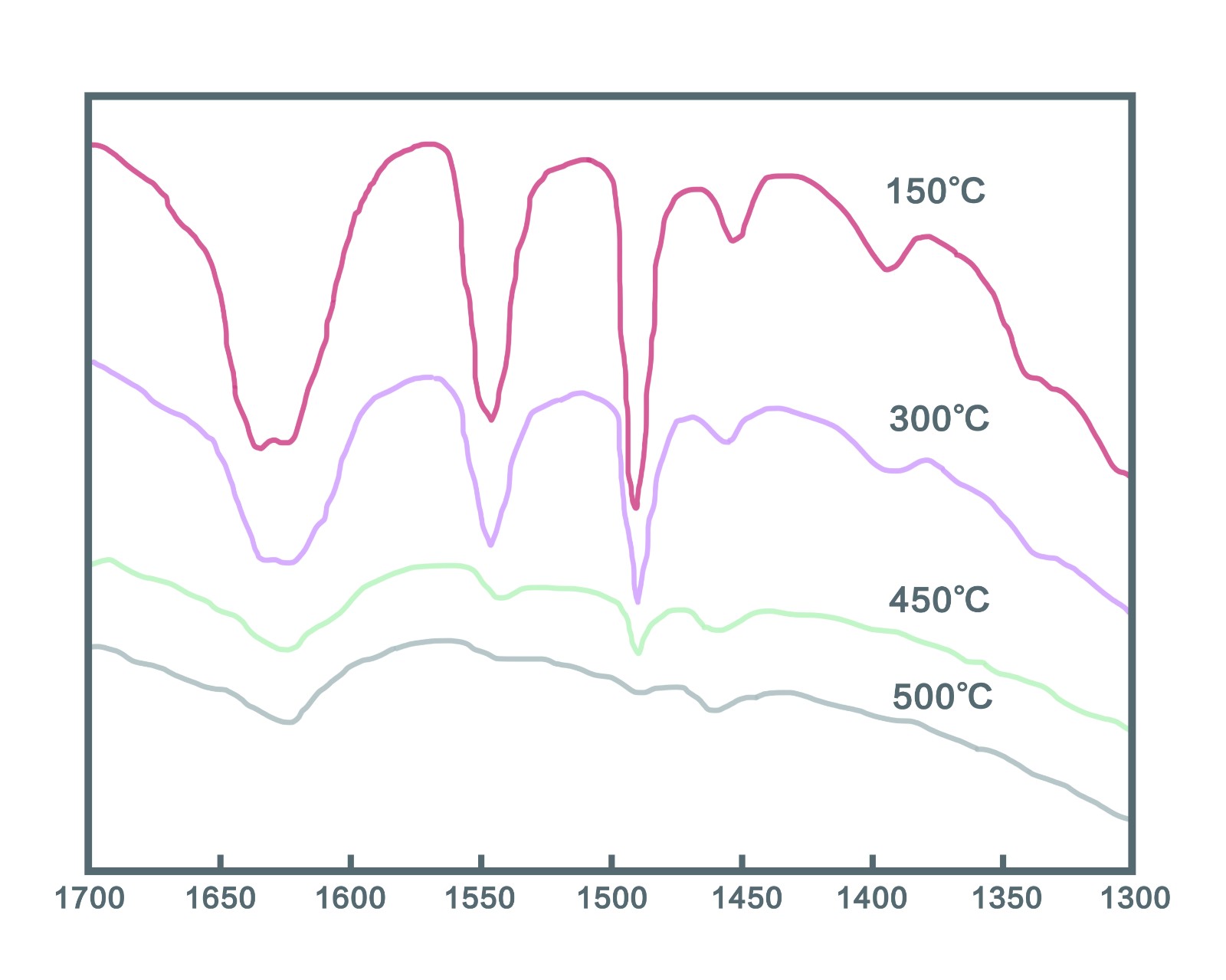
The acid area is generally an active part of the oxygen catalyst surface, and the determination of catalyst acidity is of great importance for the study of catalytic properties of the catalyst. In the study and evaluation of catalysts, the nature and acidity of the acid centre using in situ infrared measurements to characterize solid catalysts is one of the most effective methods currently used to distinguish the type of surface acidity of catalysts, which can distinguish not only B acid and L acid, but also strong and weak acids by different adsorption temperatures. If B acid and argon form ions, the characteristic peak is 1540 cm-1 ;l acids and mandatory biting keys with a characteristic peak of 1450 cm-1, 1490 cm-1 This represents the sum of the two acid centres. It is generally considered that 350 °C represents strong acid adsorption, with total acid volume at temperatures around 150 °C or 200 °C.
IR-Reactor II Infrared Spectrospectral Insulation Pools lined with quartz tubes, with high-purity ceramics as sample frames, stainless steel coatings, suitable for adsorption experiments such as B acid, L acid centre identification, with use of zirconium, NH3,CO,CO2 An adsorption agent, as a molecular probe, allows testing of catalysts for acid alkalis, adsorption dynamics studies, surface reaction in situ analysis, etc. It can be used with infrared spectrometers such as Nicolet, Bruker.
Main features:
1. Systems are highly integrated, structurally small and small in size.
2. Stone glass tubes are lined, chemically inert and resistant to acid alkali corrosion.
3. Surface smooth, easy to wash.
4. The temperature rate is fast.
5. Sample handling is simple and quick, and operation is simple.
6. Turbo molecule pump dry vacuum pump, oil-free vacuum system.
Main technical parameters:
1. Maximum vacuum: less than 1 x 10⁻⁵ mbar
Temperature range: Ambient – 500 °C.
3. SpectraRange: 1000 – 4000 cm-1