

Electrochemical In-situ IR Testing
1. Several in situ electrochemical infrared profiles
Infrared spectroscopy can be used to detect adsorbent species on solid electrodes at in situ, using molecular vibration characterization, thus (1) identification and configuration of key intermediates (2) determination of the electrode surface state (3) priority response path and selective identification (4) detection of the effects of the reaction environment, such as electrolytic anion, anion, pH, additives, etc. (5) detection of the double electrolyte interface. For hydro- or non-hydrogen electro-catalytic response, e.g. CO2RR, Her, OER, ORR, MOR, EOR, NRR, Nitrate root reduction, organic electrolytic synthesis, etc.
1.1 IRAS
IRAS or IRRAS, also known as the external reflection mode, or the trans-reflection mode, smooth electrodes (the base of carbon electrodes, smooth metal electrodes or FTOs) or the coating or deposition of electro-catalyst droplets onto the smooth electrode poles, crushing the infrared window to form an electrolytic layer (1-10 micrometres), which passes through the optical window through the electrolytic fluid layer, then reflects infrared light on the electrode surface and finally reaches the infrared detector. The external reflection model usually selects Caf2Windows, which typically have a shape around 2 mm thick, are also frequently used in gradients, hemispherics or semi-cylinders.
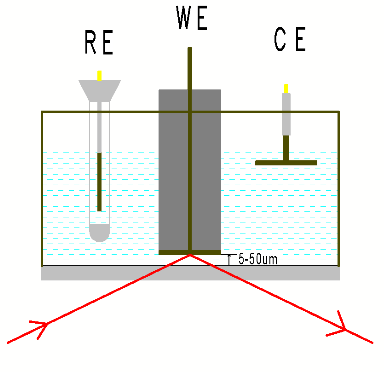
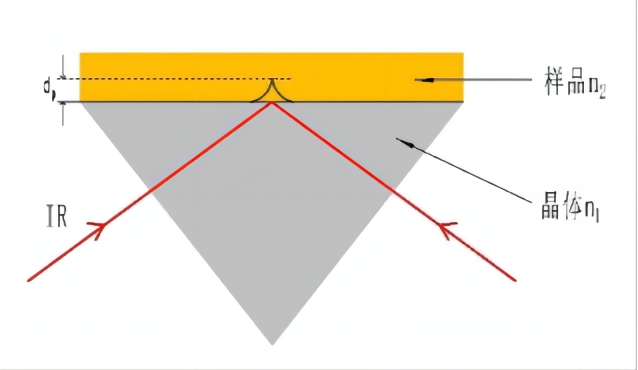
Figure 1 Extra-reflective diagram Figure 2 Description of ATR principles
1.2 Understanding the full reflection principle of decay
The rationale for the full reflection of decay: Infrared light re-enters the surface of the sample with a high rate of refraction through a crystal with a low rate of refraction, and when the input angle is greater than the critical angle, the incoming light produces a full reflection. In fact, infrared light is not fully reflected back, but rather re-enters the surface after penetrating to a certain depth within the surface of the sample, during which the sample is selectively absorbed within the area of the injecting light frequency, with a reduced reflection light intensity, producing a map similar to that of the perforation, thus obtaining structural information on the chemical composition of the surface of the sample. See Figure 2 ATR Logic Chart. The depth of infrared light penetration through the crystal interface is related to the crystal refractive rate and the angle of injection, and the refractive rate of common crystals is shown in table 2, the greater the refraction rate, the smaller the penetration depth.
1.3 Internal reflection ATR-SEIRAS and internal reflection Otto thin layer mode
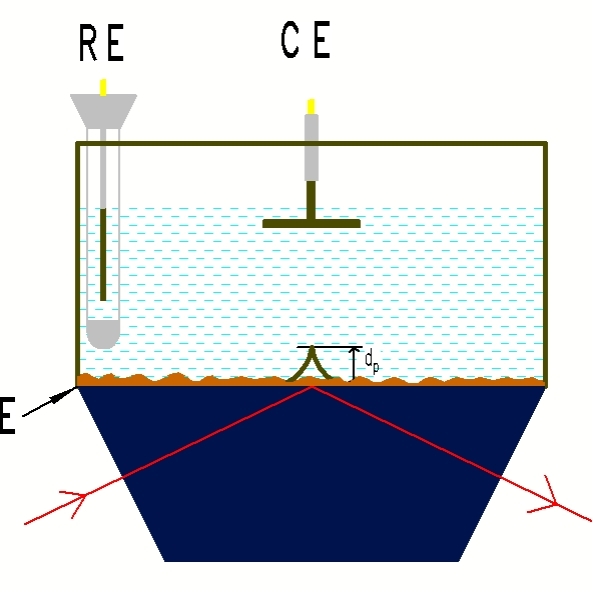
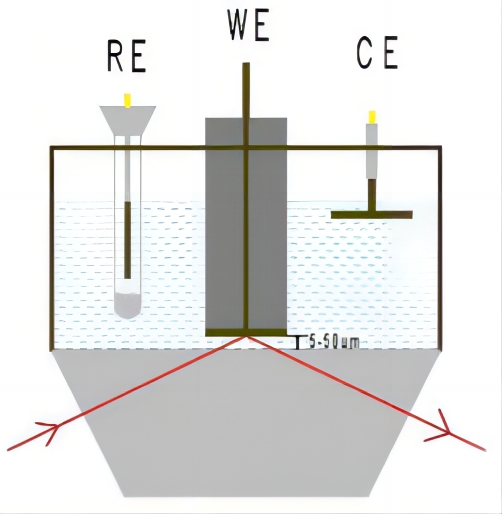
Figure 3 Internal Reflection ATR-SEIRAS Figure 4 Internal reflection Otto thin layer mode
The internal reflection ATR-SEIRAS model, also known as the Kretschmann construction, as shown in the figure above, chemically plating or vacuum plating an island membrane on the ATR crystal (ZnSe, Si, Ge) plane, coating on the top of the metallic membrane or electro-sedimentation catalyst, and the membrane as a conductor base, while acting as a surface booster, increasing the infrared signal of the catalyst ‘ s surface ads to molecules 10 – 1,000 times more than the signal when it is not. This is called the surface enhancement infrared effect, SEIRAS. There are different ranges of pH for different crystals, and different spectrum ranges, as detailed in table 2.
The difference between the internal reflection Otto thin layer model, similar to the external reflection structure, is that the general selection of decaying complete reflection crystals, such as ZnSe, Ge, Si, diamonds, in the internal reflection Otto thin layer model, is based on the reflection principle of ATR, as shown in figure 4.
2. Experimental attention
2.1 Selection basis for internal and external reflections
|
Electrochemical pool
|
Selectable crystals |
Passage |
Distribution of electrical field lines |
Electrical material requirements |
Detectable species |
|
ATR internal reflectionKretschmann(ATR-SEIRAS) |
Diamond,Si,Ge, ZnSe |
And not a thin layer.There’s little resistance. |
even |
Metal membrane + dripping orElectric deposition catalyst |
Absorption |
|
ATR internal reflectionOtto Thin Model Pattern |
Diamond,Si,Ge, ZnSe |
Tight formations,There’s a lot of resistance. |
Uneven |
Mirror smooth or rough surface catalyst (e.g. carbon paper or foam nickel load) |
Adsorption + solution phase |
|
IRRAS |
CaF2 |
Tight formations,There’s a lot of resistance. |
Uneven |
Mirrors, such as carbon electrodes, smooth base electrodes + droplets or electro-deposition catalysts |
Adsorption + solution phase |
Table 1 Comparison of Electromagnetic Infrared Spectrospectral Chemical Pool Structures
2.2 Crystal selection
|
Crystal type |
Spectrum range (cm)-1) |
pH range |
Refraction rate (the greater the refraction rate, the smaller the penetration depth) |
|
ATR mode crystal |
|||
|
Diamond |
525-4000 |
1-14 |
2.42 |
|
ZnSe |
520-4000 |
5-9 |
2.40 |
|
Si |
1200-4000 |
1-12 |
3.40 |
|
Ge |
575-4000 |
1-14 |
4.00 |
|
Out-reflection mode crystal |
|||
|
CaF2 |
1100-4000 |
5-8 |
1.43 |
Table 2
2.3 Entry angle
In both ATR and external reflection measurements, the angle of the input angle and whether or not to opt for a partial oscillation as a source of light determines the spectral strength obtained; theoretically, a larger angle of entry (70-80°) would be better. However, as the beam follows the input angle on the interface and the general electrode size is 1-2 cm in diameter, no significant signal enhancement was observed when the angle changed at 60-80°. The same optical attachments may be used for external and internal reflection ATR-SEIRAS, using 60 or 65° light.
2.4 Up and down.
Infrared spectrospectral maps are presented in both the sorbence and passivity, are mutually upward and downward, facilitate discussion, assuming that, for a reference map (usually a straight line) at a given level, a species is consumed if a positive peak (i.e. up) is produced, and if it is a down (i.e. down) a species. If, for specific reactions, the penultimate interpretation of the consumption of a species is not clear, or when the peak of a given range is abnormal, it may be related to two other factors: (1) the injection angle (2) the volume filling factor of the metal particles (SEIRAS base or nanocatalyst particles) by the metal party, note: not the size of the particles.
2.5 Optical choice
There are two types of light circuits currently commonly used: a fixed radial attachment with an input angle (generally 60-70 degrees) and a radial attachment with an input angle that can be reconciled (30-80 degrees). Angular optical attachments, which have increased the loss of light energy by increasing the number of lenses through the use of a combination of plane mirrors and non-platform focus mirrors, and a light-route system using a single-reflection attachment, which has reduced the loss of energy due to the lack of multiple reflections, benefit from a high sensitivity MCT detector and are available in both ways with a high-quality spectrum.
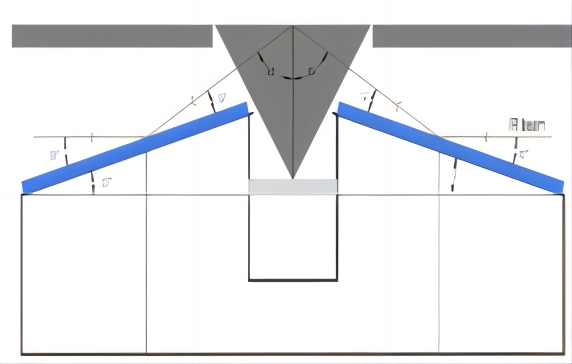
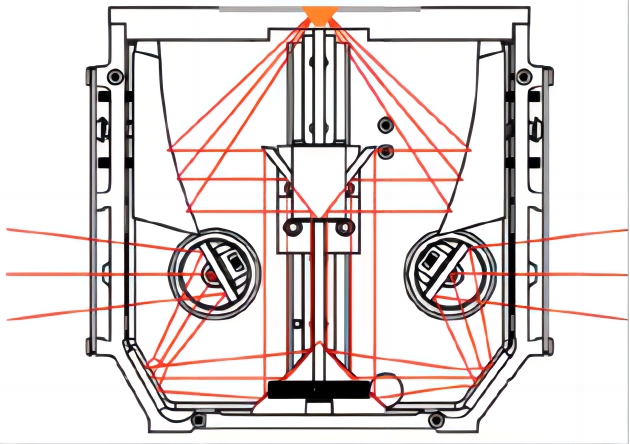
Figure 5 60° map of angle light Figure 6 VeeMaxIII light map
2.6 Electrochemical pool selection (single and double chamber, flow and stationary)
The Electrochemical pool is very diverse and has a single chamber (i.e., three electrodes in the same chamber) and a double chamber. Dunwell and others[4]The system studied electrolyte purity and the type of electrodes, and the results recommended:2Emission reduction, recommended for double cavity rooms, proton exchange membrane will isolate electrodes from working electrodes to avoid reactions to the spread of electrodes to working electrodes (2) with highly pure reagent configuration electrolytic fluids, and sometimes with pure electrolytics (3) with carbon rods for electrodes rather than Pt wires. Because Pt dissolves, it may spread to the cathode, and Pt is a good catalyst for hydrogen analysis. Malkani et al. provided a detailed comparison of flow and static CO-reducing effects, with studies showing better passivity in case of mixing. It needs to be noted, however, that in practice there are catalysts that fall off the crystal surface in a state of intense convection, making the experiment impossible to move forward.
The ATR-SEIRAS model, or the Kretschmann model, only applies to powder catalysts or other catalysts for electrode deposition on metallic membranes. Catalytic catalysts such as large electrodes or carbon paper are not visible and therefore reflector or Otto models are occasionally used.
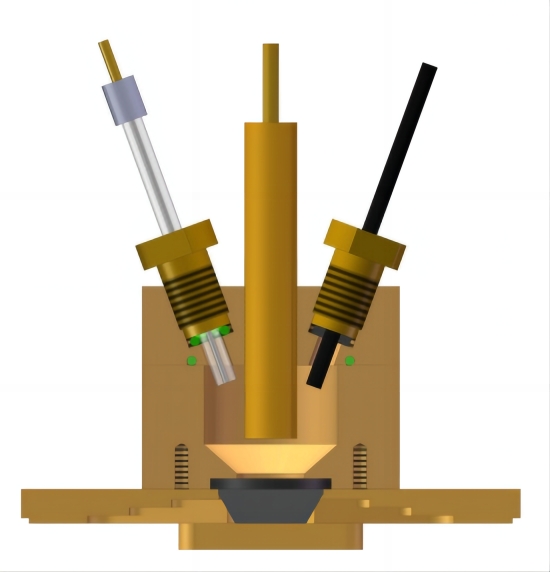
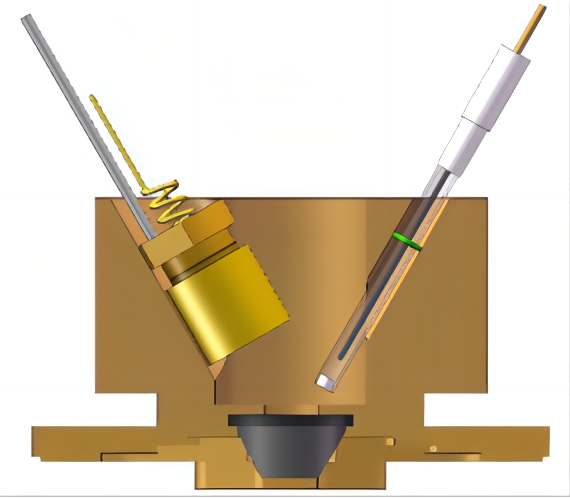
Figure 7 External reflector chemistry pool Figure 8 Double cavity electrochemical pool in small volume reflection
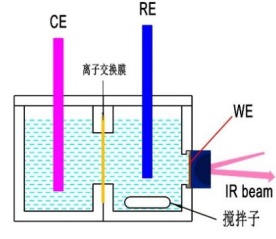
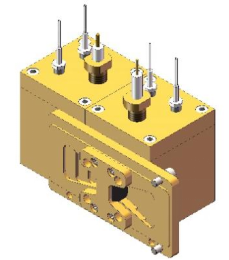
Figure 9 Diagram of diaphragm mixed electrochemical pool Figure 10 Double cavity mixing electrochemical pool
2.7 Surface enhanced infrared attention
(1) The strength of the spectrum is dependent on the surface shape of the metal, which is well enhanced by the metallic metallic membranes prepared for vacuum evaporation and electrochemical deposition;
(2) Physical adsorption and chemical adsorption molecules are enhanced and generally chemical adsorption molecules are more intense than physical adsorption molecules;
(3) The first layer of molecules directly connected to the surface of the metal has the strongest signals, and the multiplier effect declines as the surface distance of the electrode increases, i.e. the surface enhancement is a short-range effect.
Preparation of the SEIRAS base
Many materials can be used as a base for metal deposition, such as Ge, Si, ZnSe, CaF2Wait. The chemical properties of the base itself are important factors influencing the enhanced effect, as it determines the surface shape of the sediment membrane. The grinding and cleaning of the base before each deposition is a factor in the tube to ensure the replicability of the experiment, and in some cases the surface restoration of the base also affects the enhancement.
(1) Nanofilm for dry law and order
There are mainly vacuum plating and spattering. The enhancement of metallic membranes is influenced by physical features, particle size and island particle density. For vapour plating, a lower sedimentation rate (0.1-0.5 nm/min) would facilitate a better enhancement.
(2) Wet legal nanofilm
Membrane ratio for chemical platingVacuum plating membrane nanoion is larger in particle size, chemical sedimentation has much greater viscosity between the Au membrane and the silica base than vacuum evaporation, and SEIRAS reinforcement factor is larger, probably because there is no oxide between the base and the gold membrane, i.e. before the chemical plating the silica surface uses NH first.4F remove surface oxides. In addition, the enhanced electric field will decay within the oxidation layer, so that the prepared metallic membranes will be used as quickly as possible, or electrochemically washed prior to use.
2.8 Choice of electrochemical test methods
Electrochemical methods commonly used in in situ electrochemical infrared spectroscopy are LSV/CV, time current method, single-step steps, multi-step steps, square-volam. The appropriate spectral data collection based on the electrochemical method chosen is manual and automatic.
3. Selected application cases
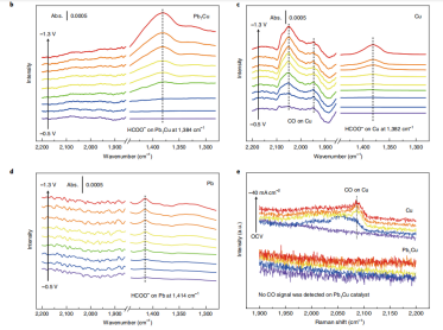
CO2Electricity reductionNature Nanotechnology 2021,16, 1386–1393
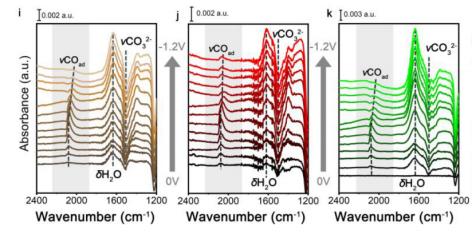
CO2 power reduction J. Am. Chem. Soc.2022, 144, 259−269
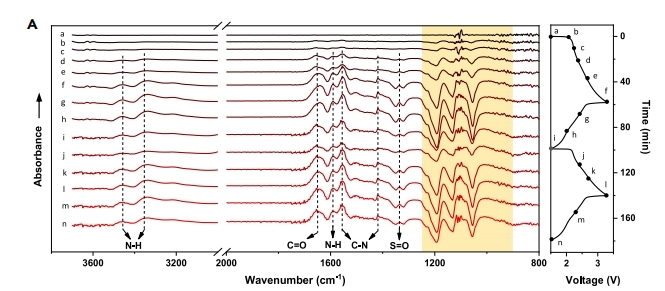
Zinc ion batteries Joule 2022, 6, 399–417
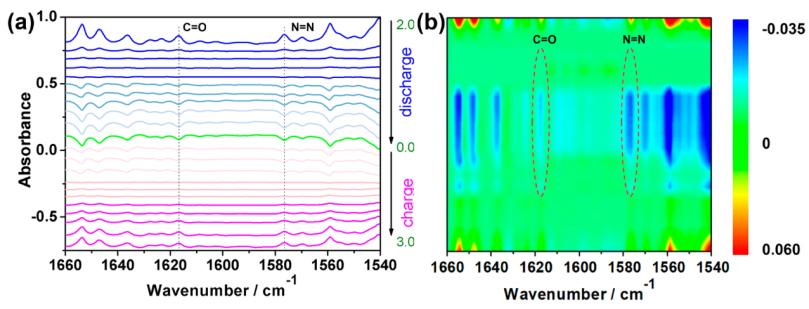
Lithium ion batteriesACS Energy Lett. 2020, 5, 1022−1031
4. List of selected publications of client papers:
-
Jianping Xiao*, Bin Zhang*, et al. Unveiling hydrocerussite as an electrochemically stable active phase for efficient carbon dioxide electroreduction to formate. Nat. Commun. 2020, 11, 3415
-
Lei Yan, Yonggang Wang*, et al. Chemically Self-Charging Aqueous Zinc-Organic Battery. J. Am. Chem. Soc. 2021, 143, 15369-15377
-
Nan Wang, Yonggang Wang*, et al. Zinc-organic Battery with a Wide Operation-temperature Window from -70 to 150 oC Angew. C.hem. Int. Ed. 2020,59,14577-14583
-
Bingliang Wang, Yongyao Xia*, et al. In situ structural evolution of the multi-site alloy electrocatalyst to manipulate the intermediate for enhanced water oxidation reaction. Energy Environ. Sci. 2020, 13, 2200-2208
-
Yang Peng*, et al. Breaking Linear Scaling Relationship by Compositional and Structural Crafting of Ternary Cu-Au/Ag Nanoframes for Electrocatalytic Ethylene Production. Angew. Chem. Int. Ed. 2021, 60, 2508-2518
-
Zhuo Yu, Yonggang Wang*, et al. Boosting Polysulfide Redox Kinetics by Graphene-Supported Ni Nanoparticles with Carbon Coating. Adv. Energy Mater. 2020, 10, 2000907
-
Xinwei Ding, Zhi Yang*, et al. Biomimetic Molecule Catalysts to Promote the Conversion of Polysulfides for Advanced Lithium–Sulfur Batteries Adv. Funct. Mater. 2020, 30, 2003354
-
Hong Guo*, Xueliang Sun*, et al. Dual Active Site of the Azo and Carbonyl-Modified Covalent Organic Framework for High-Performance Li Storage. ACS Energy Lett. 2020, 5, 1022-1031
-
Suya Zhou, Zhi Yang*, et al. Dual-Regulation Strategy to Improve Anchoring and Conversion of Polysulfides in Lithium–Sulfur Batteries ACS Nano 2020, 14, 7538–7551
-
Yongyao Xia*, et al. Low-Temperature Charge/Discharge of Rechargeable Battery Realized by Intercalation Pseudocapacitive Behavior. Adv. Sci. 2020, 7, 2000196
-
Lei Wang*, Yonggang Wang, et al. Pencil-drawing on nitrogen and sulfur co-doped carbon paper: An effective and stable host to pre-store Li for high-performance lithium–air batteries. Energy Storage Materials 2020, 26, 593-603
-
Guanglei Cui*, Liquan Chen, et al. Non-flammable nitrile deep eutectic electrolyte enables high voltage lithium metal batteries. Chem. Mater. 2020, 32, 3405-3413
-
Guanglei Cui*, et al. Investigation on the Cathodic Interfacial Stability of Nitrile Electrolyte and its performance with High Voltage LiCoO2 Chem. Commun. 2020, 56, 4998-5001
-
Zhongbin Zhuang*, et al. A highly-active, stable and low-cost platinum-free anode catalyst based on RuNi for hydroxide exchange membrane fuel cells. Nat. Commun. 2020, 11, 5651
-
Tiancun Liu, Yong Wang*, et al. Organic supramolecular protective layer with rearranged and defensive Li deposition for stable and dendrite-free lithium metal anode. Energy Storage Materials 2020, 32, 261–271
-
X. Yin, Y. Wang*, et al. Designing cobalt-based coordination polymers for high-performance sodium and lithium storage: from controllable synthesis to mechanism detection. Materials Today Energy 2020, 17, 100478
-
Song Chen, Jintao Zhang*, et al. Regulation of Lamellar Structure of Vanadium Oxide via Polyaniline Intercalation for High-Performance Aqueous Zinc-Ion Battery. Adv. Funct. Mater. 2020, 30, 2003890
-
Nannan Meng, Yifu Yu, Bin Zhang*, et al. Efficient Electrosynthesis of Syngas with Tunable CO/H2 Ratios over ZnxCd1-xS-Amine Inorganic-Organic Hybrids. Angew. Chem. Int. Ed. 2019, 58, 18908–18912
-
Yanrong Xue, Zhongbin Zhuang*, et al. Sulfate-Functionalized RuFeOx as Highly Efficient Oxygen Evolution Reaction Electrocatalyst in Acid. Adv. Funct. Mater. 2021, 31, 2101405
-
Hong Guo*, et al. Cooperative catalytic interface accelerates redox kinetics of sulfur species for high-performance Li-S batteries. Energy Storage Materials 2021, 40, 139-149
-
Yang Peng*, et al. Geometric Modulation of Local CO Flux in Ag@Cu2O Nanoreactors for Steering the CO2RR pathway toward High-Efficacy Methane Production. Adv. Mater. 2021, 33, 2101741
-
Yonggang Wang*, et al. Molecular Tailoring of n/p-type Phenothiazine Organic Scaffold for Zinc Batteries. Angew. Chem. Int. Ed. 2021, 60, 20826-20832
-
Hongliang Jiang*, Chunzhong Li*, et al. Dynamically Formed Surfactant Assembly at the Electrified Electrode–Electrolyte Interface Boosting CO2 Electroreduction. J. Am. Chem. Soc. 2022, 144, 6613–6622
-
Yang Peng*, et al. Au-activated N motifs in non-coherent cupric porphyrin metal organic frameworks for promoting and stabilizing ethylene production. Nat. Commun. 2022, 13, 63
-
Jie Zeng*, et al. Copper-catalysed exclusive CO2 to pure formic acid conversion via single-atom alloying. Nature Nanotechnology 2021, 16, 1386-1393
-
Min-Rui Gao*, et al. Identification of Cu(100)/Cu(111) Interfaces as Superior Active Sites for CO Dimerization During CO2 Electroreduction. J. Am. Chem. Soc. 2022, 144, 1, 259-269
-
Chen Feng, Shiming Zhou*, Jie Zeng*, et al. Tuning the Electronic and Steric Interaction at the Atomic Interface for Enhanced Oxygen Evolution. J. Am. Chem. Soc. 2022, 144,21,9271-9279
-
Rui Lin, Jianhui Wang, et al. Asymmetric donor-acceptor moleculeregulated core-shell-solvation electrolyte for high-voltage aqueous batteries. Joule 2022, 6, 399–417
-
Zhongju Wang, Yongzhu Fu*, et al. Biredox‐Ionic Anthraquinone‐Coupled Ethylviologen Composite Enables Reversible Multielectron Redox Chemistry for Li‐Organic Batteries. Adv. Sci. 2022, 9, 2103632
-
Jintao Zhang*, et al. Defect evolution of hierarchical SnO2 aggregatesfor boosting CO2 electrocatalytic reduction. J. Mater. Chem. A 2021, 9, 14741-14751
-
Fei Ai, Yijun Lu*, et al. Heteropoly acid negolytes for high-power-density aqueous redox flow batteries at low temperatures. Nature Energy. 2022, 7, 417–426
-
Zhejun Li, Yijun Lu*. Polysulfide-based redox flow batteries with long life and low levelized cost enabled by charge-reinforced ion-selective membranes. Nature Enery. 2021, 6, 517–528
-
Tieliang Li, Yifu Yu, Bin Zhang*, et al. Sulfate-Enabled Nitrate Synthesis from Nitrogen Electrooxidation on Rhodium Electrocatalyst. Angew. Chem. Int. Ed. 2022, e202204541
-
Yanbo Li, Bin Zhang, Yifu Yu*, et al. Electrocatalytic Reduction of Low-Concentration Nitric Oxide into Ammonia over Ru Nanosheets. ACS Energy Letters. 2022, 7, 1187-1194
-
Yanmei Huang, Yifu Yu, Bin Zhang*, et al. Direct Electrosynthesis of Urea from Carbon Dioxide and Nitric Oxide. ACS Energy Letters. 2022, 7, 284-291
-
Wenfu Xie, Hao Li, Min Wei*, et al. NiSn Atomic Pair on Integrated Electrode for Synergistic Electrocatalytic CO2 Reduction. Angew. Chem. Int. Ed. 2021, 60, 7382–7388
-
Rui Sui, Jiajing Pei, Zhongbin Zhuang*, et al. Engineering Ag−Nx Single-Atom Sites on Porous Concave NDoped Carbon for Boosting CO2 Electroreduction. ACS Appl. Mater. Interfaces. 2021, 13, 17736-17744
-
Tiliang Li, Yuting Wang, Yifu Yu*, Bin Zhang*, et al. Ru-Doped Pd Nanoparticles for Nitrogen Electrooxidation to Nitrate. ACS Catal. 2021, 11, 14032-14037
-
Jintao Zhang* et al. Atomic Bridging Structure of Nickel-Nitrogen-Carbon for Highly Efficient Electrocatalytic Reduction of CO2. Angew. Chem.Int. Ed. 2022, 61, e202113918
-
Lang Xu* et al. Gadolinium Changes the Local Electron Densities of Nickel 3d Orbitals for Efficient Electrocatalytic CO2 Reduction. Angew. Chem.Int. Ed. 2022, 61, e202201166
-
Bin Zhang* et al. Phenanthrenequinone-like moiety functionalized carbon for electrocatalytic acidic oxygen evolution. Chem. 2022, 8, 1415-1426
-
Sheng Dai*, Minghui Zhua*, Yifan Han* et al. Probing the role of surface hydroxyls for Bi, Sn and In catalysts during CO2 Reduction. Applied Catalysis B: Environmental. 2021, 298,